Early returns
When the nature signals with color, we notice too.
Ponder this as you relish the colors of early summer…
How Does the Brain Turn Waves of Light Into Experiences of Color?“Many of us take for granted the rich colors we see every day – the red of a ripe strawberry or the deep brown in a child’s eyes. But those colors do not exist outside of our brains,” said Rudy Behnia, PhD, a principal investigator at Columbia’s Zuckerman Institute... Rather, she explained, colors are perceptions the brain constructs as it makes sense of the longer and shorter wavelengths of light detected by the eyes.
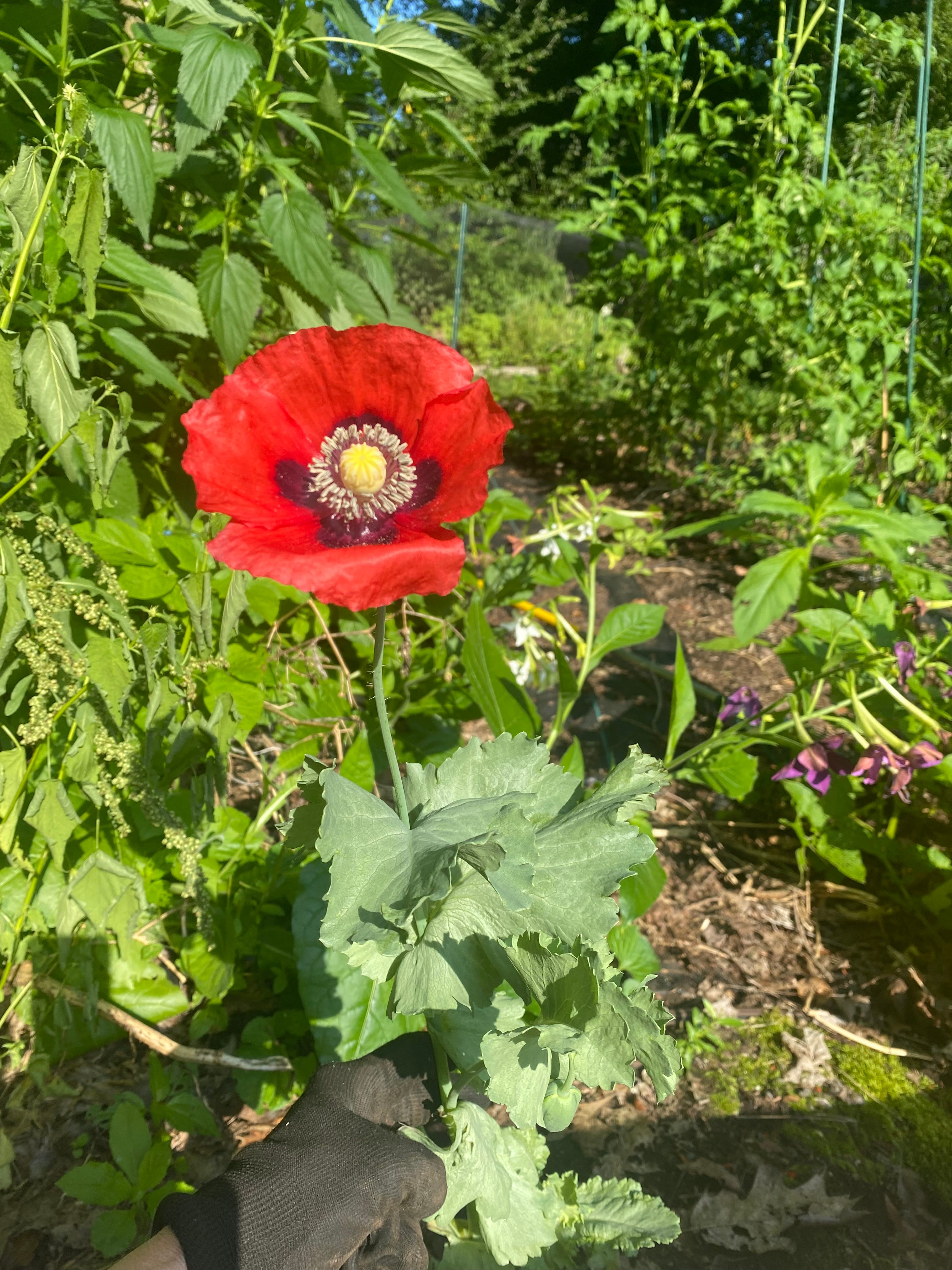
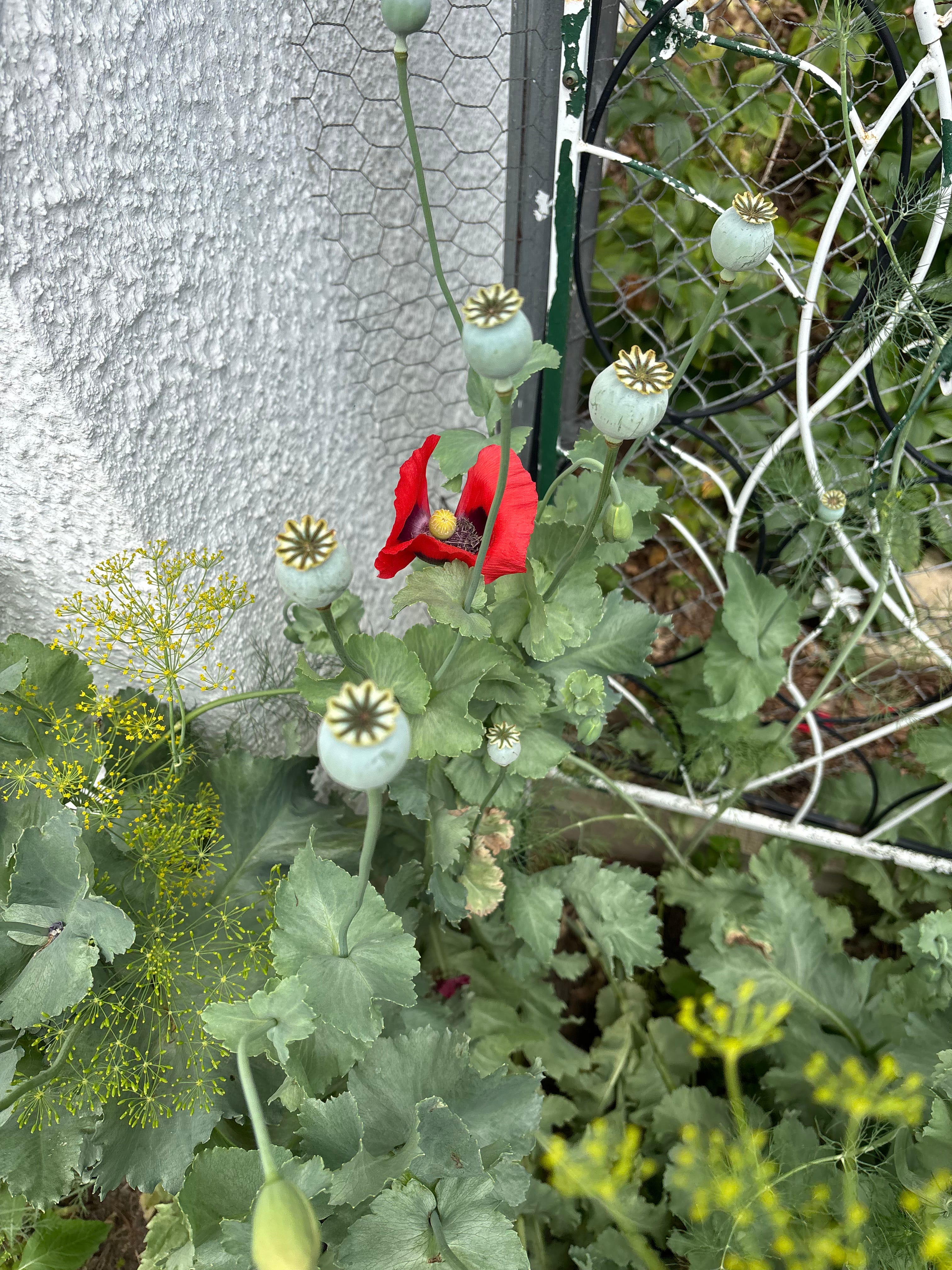
Our first poppy sprang from seed gifted by Brother Chris that I tossed into the big garden and forgot about. Below, in his garden, the iconic poppy seed heads are just as compelling as the blooms, albeit in a less colorful way.
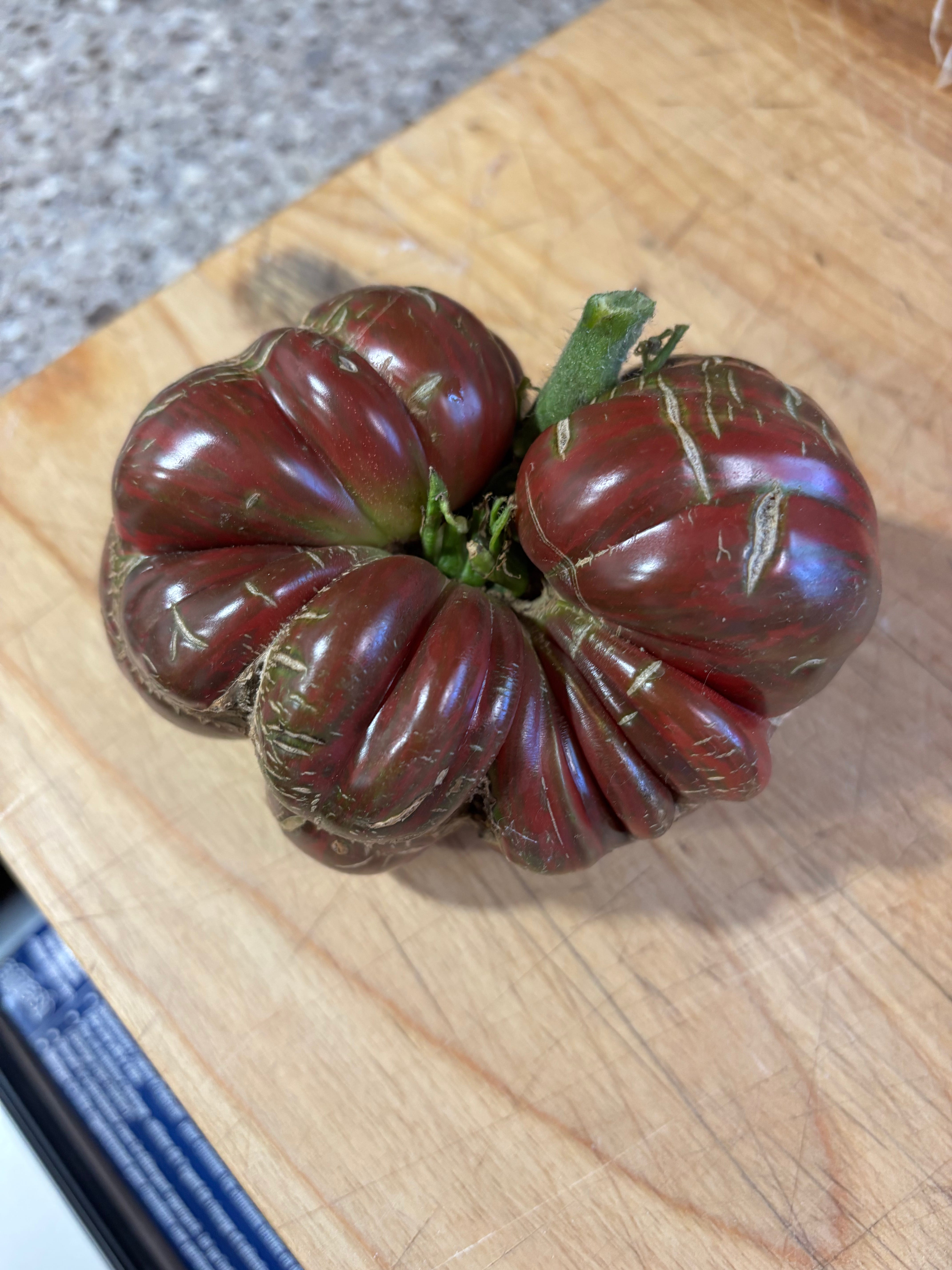
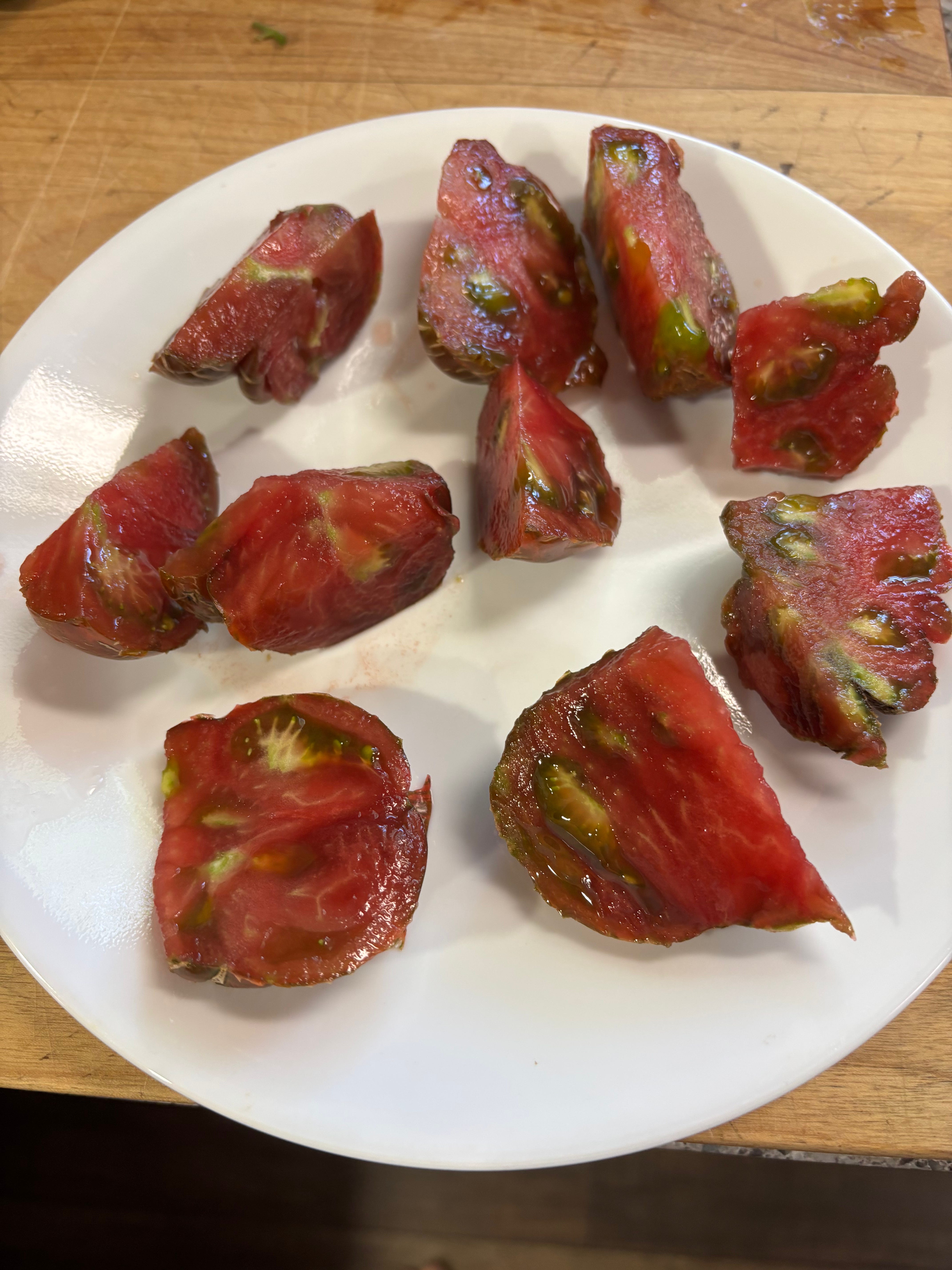
Speaking of Chris, he had his earliest large tomato with this slightly deformed Berkeley Pink Tie Dye June 20. The plant had a wee tomato developing back when he got it in our spring plant share.
Look what Hudson Valley Seed Company says about this one: In our 2022 farm trials, this beefsteak was the hands-down favorite. The flavor is deliciously complex: rich, tangy, with a savory umami base, and the texture is both meaty and juicy.
Also showing color in the Chris-Trev garden is this Black Russian—not summer sweet, they say, but excellent flavor for another early pick.
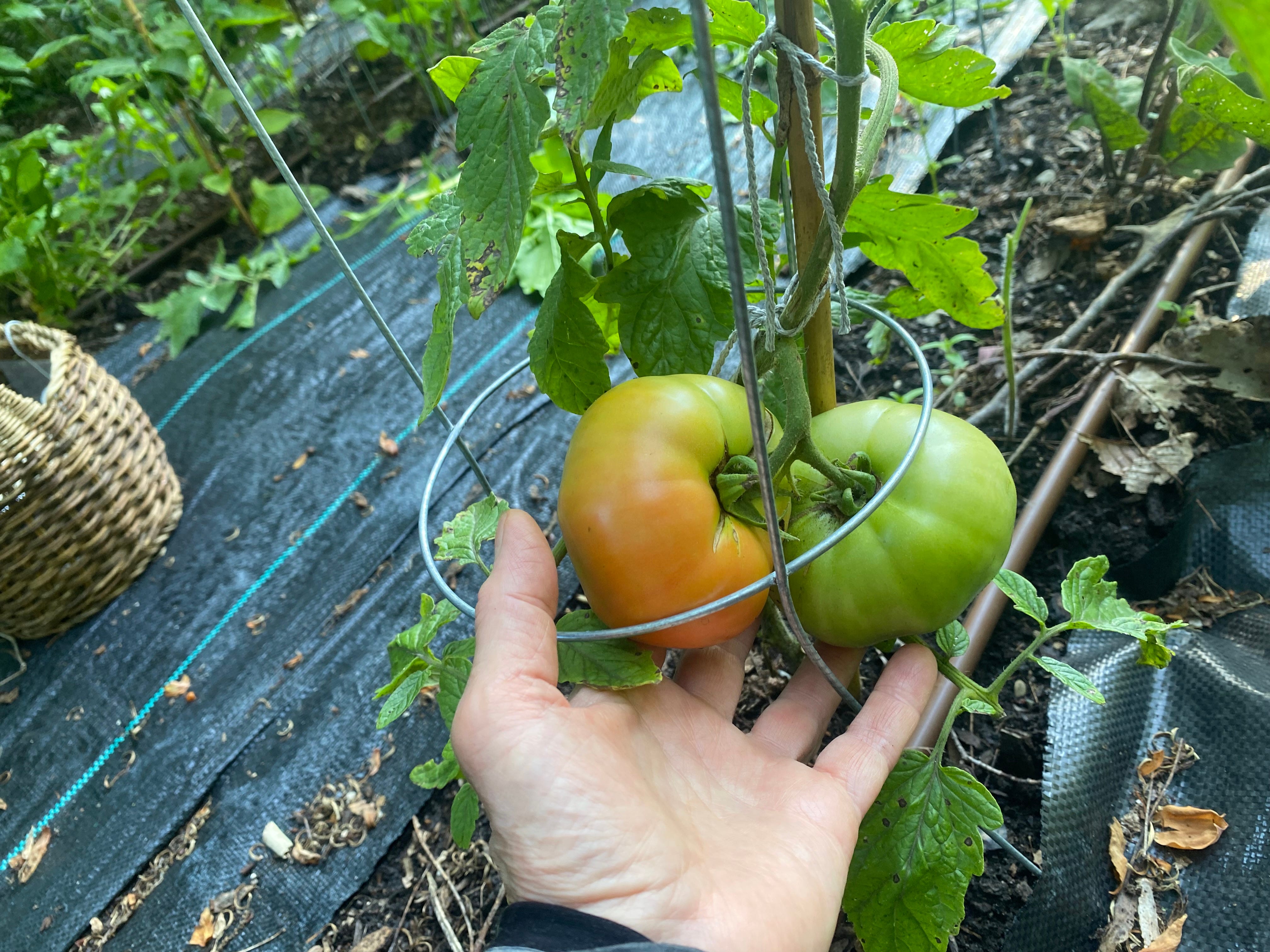
This week a heat dome—with temps close to 100F and unspeakably high humidity—should move the tomatoes toward ripening. Here’s Goldie, also planted with a couple tiny tomatoes on the plant, now showing its colors.
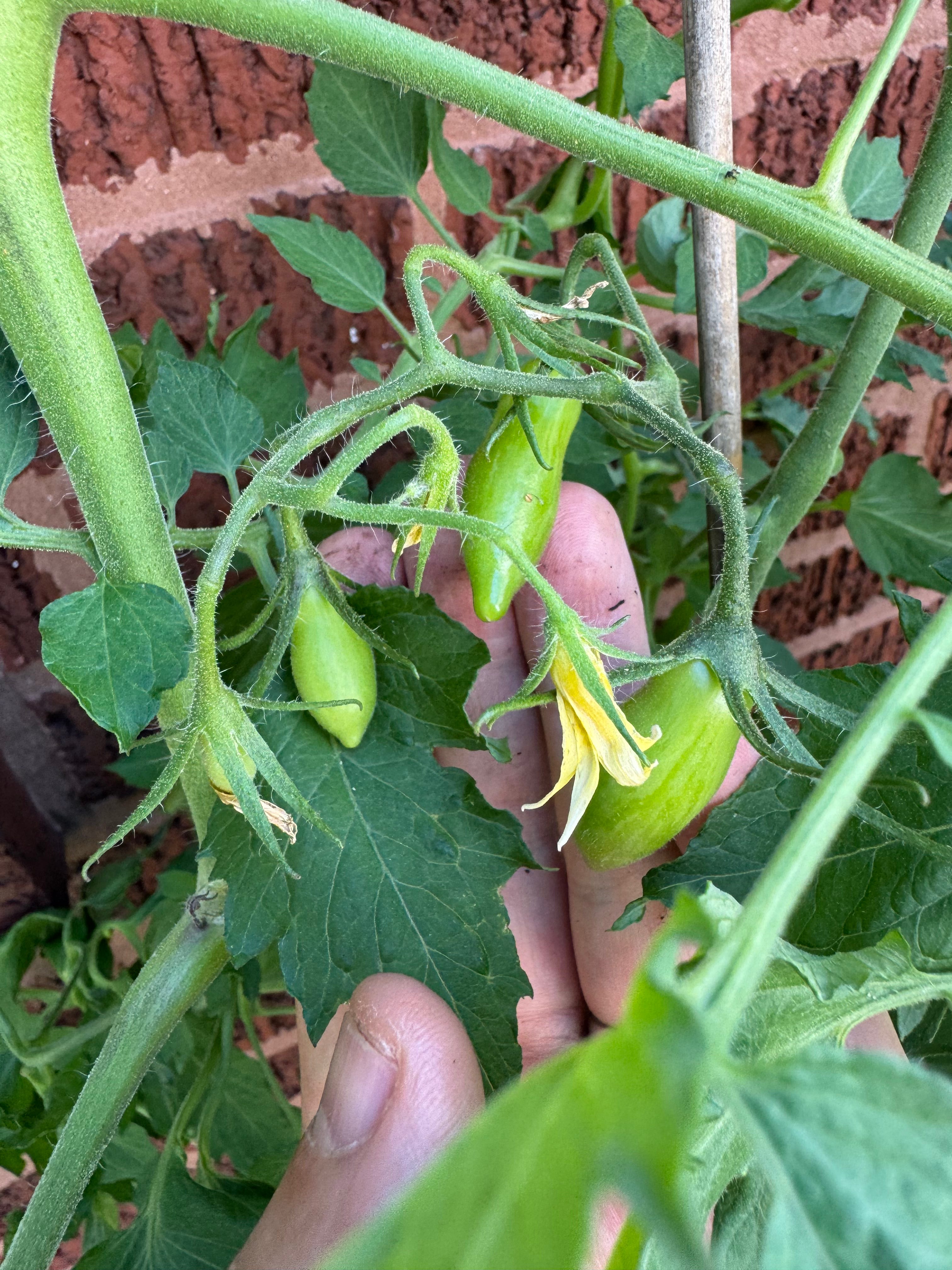
More in keeping with most of our (green) tomatoes, Marc’s already anticipating his Prairie Fire harvest. The uniquely shaped fruit is unmissable in the garden and its high-sugar flavor—”insanely sweet fruit with a brix reading of 10.0”—makes snacking a requirement.
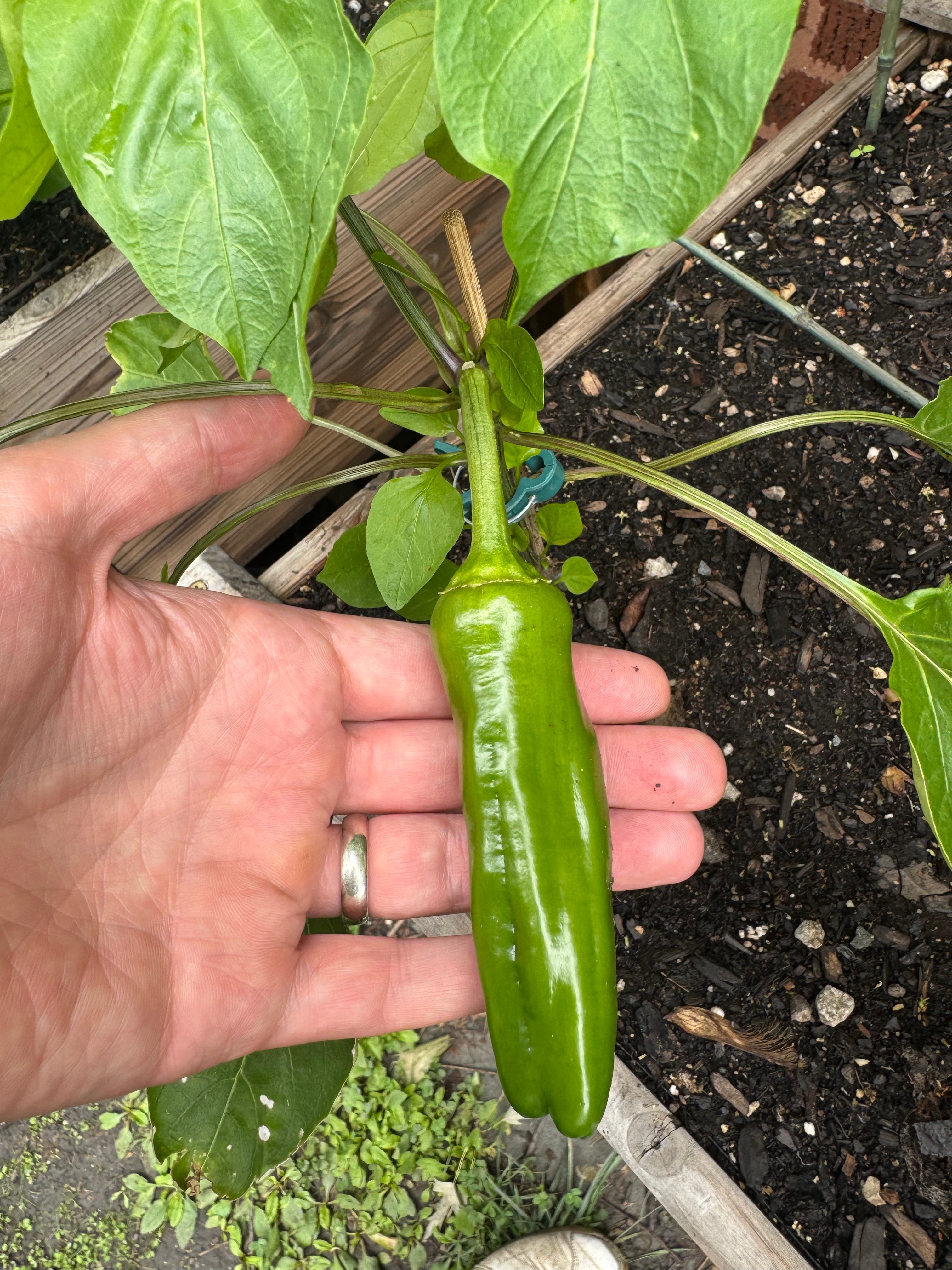
What’s happening in Pepperland? Over at Marc’s, the Spanish Mammoth is coming on strong
And everyone’s favorite Sarit Gat is already two feet tall and turning yellow.
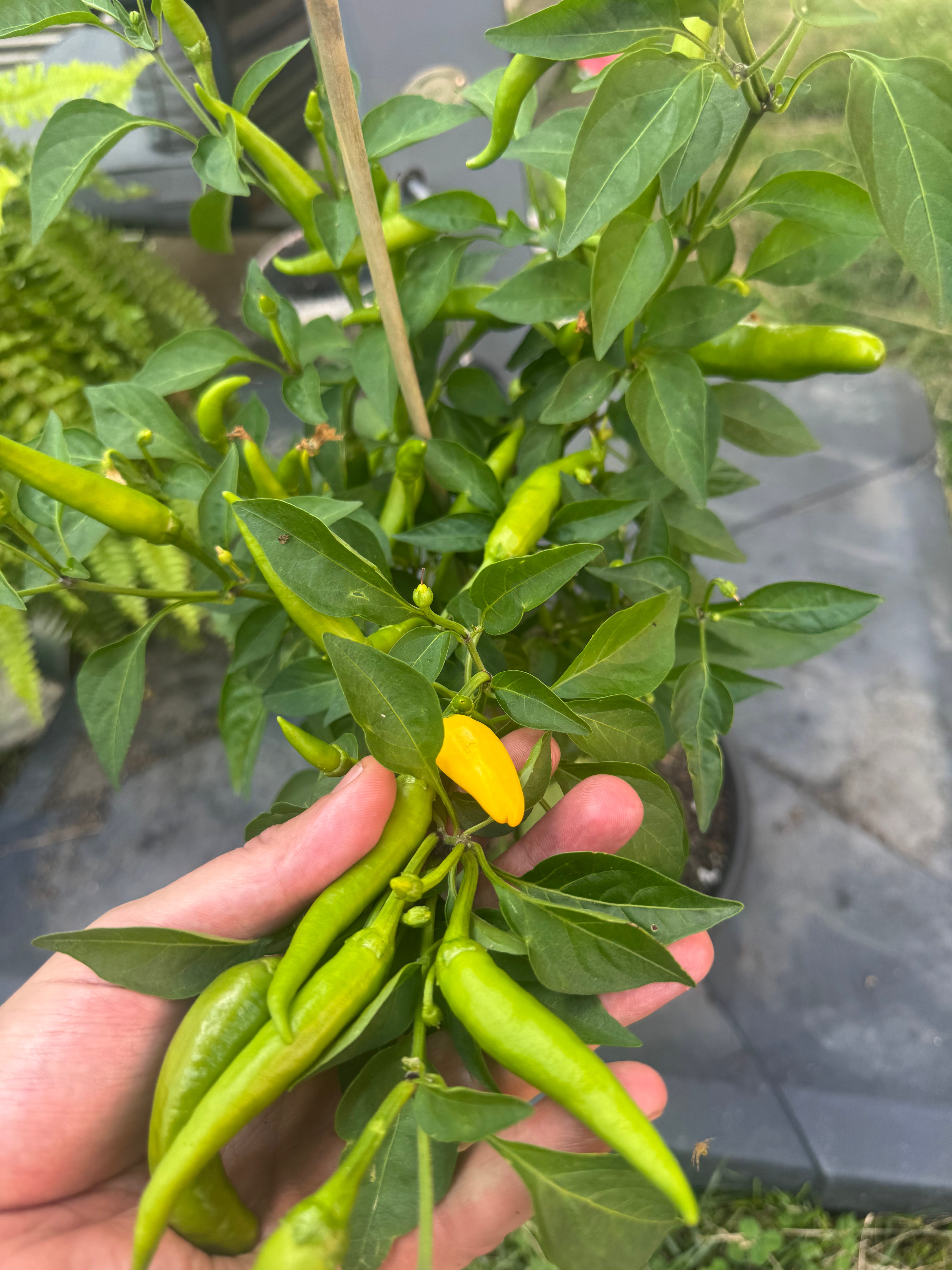
Here’s a Petit Marsellais we found hiding in the green. From the link: The flavor is extraordinary and deeper than purely sweet, reminding us of a rich, citrusy chili whose heat you keep waiting for but never arrives. In Provence, they are picked green and sautéed whole in olive oil stuffed with eggs, garlic, gruyere, parsley, salt, and pepper.
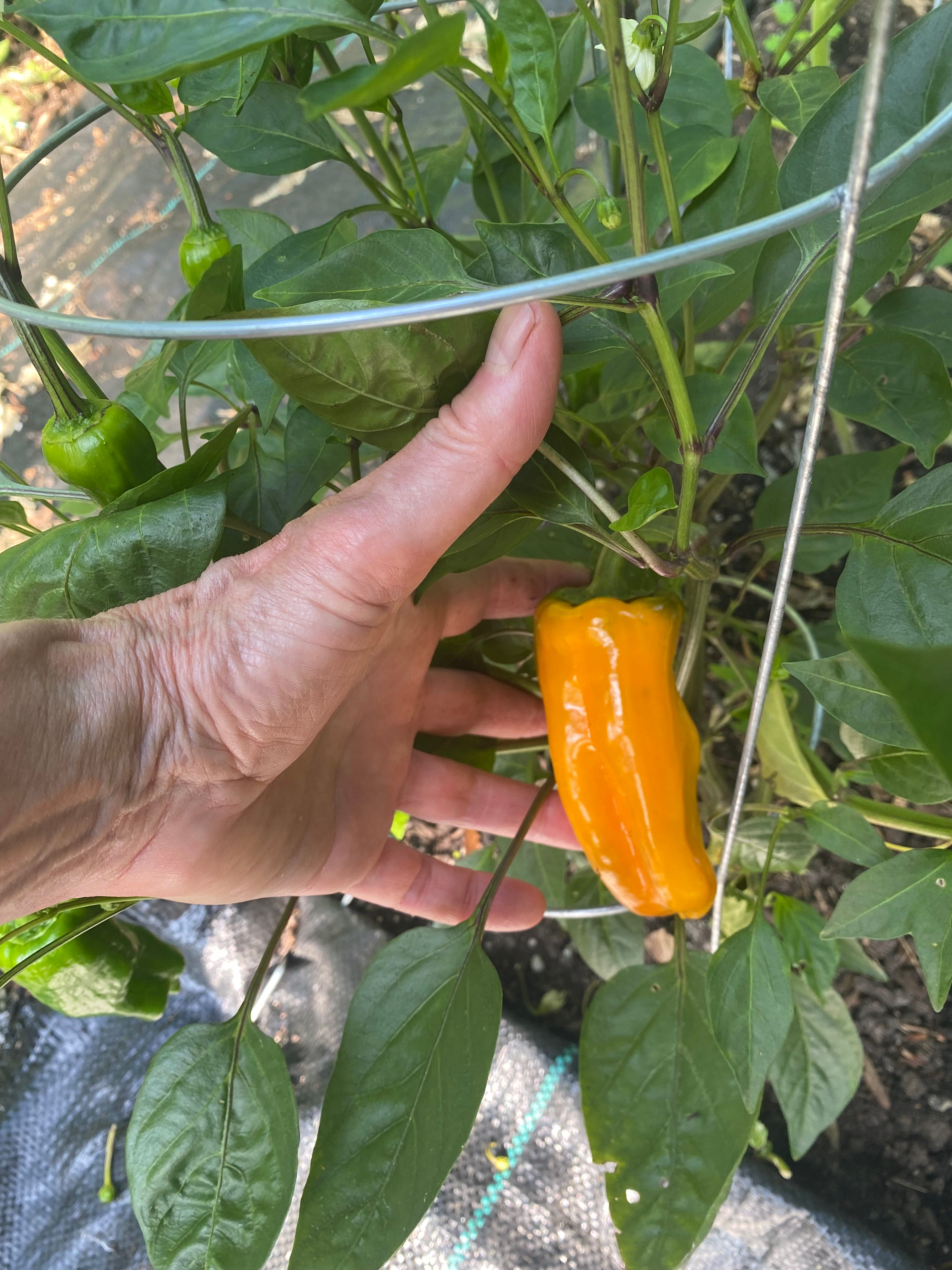
And our first Bonda ma Jacques, which hails from the Caribbean.
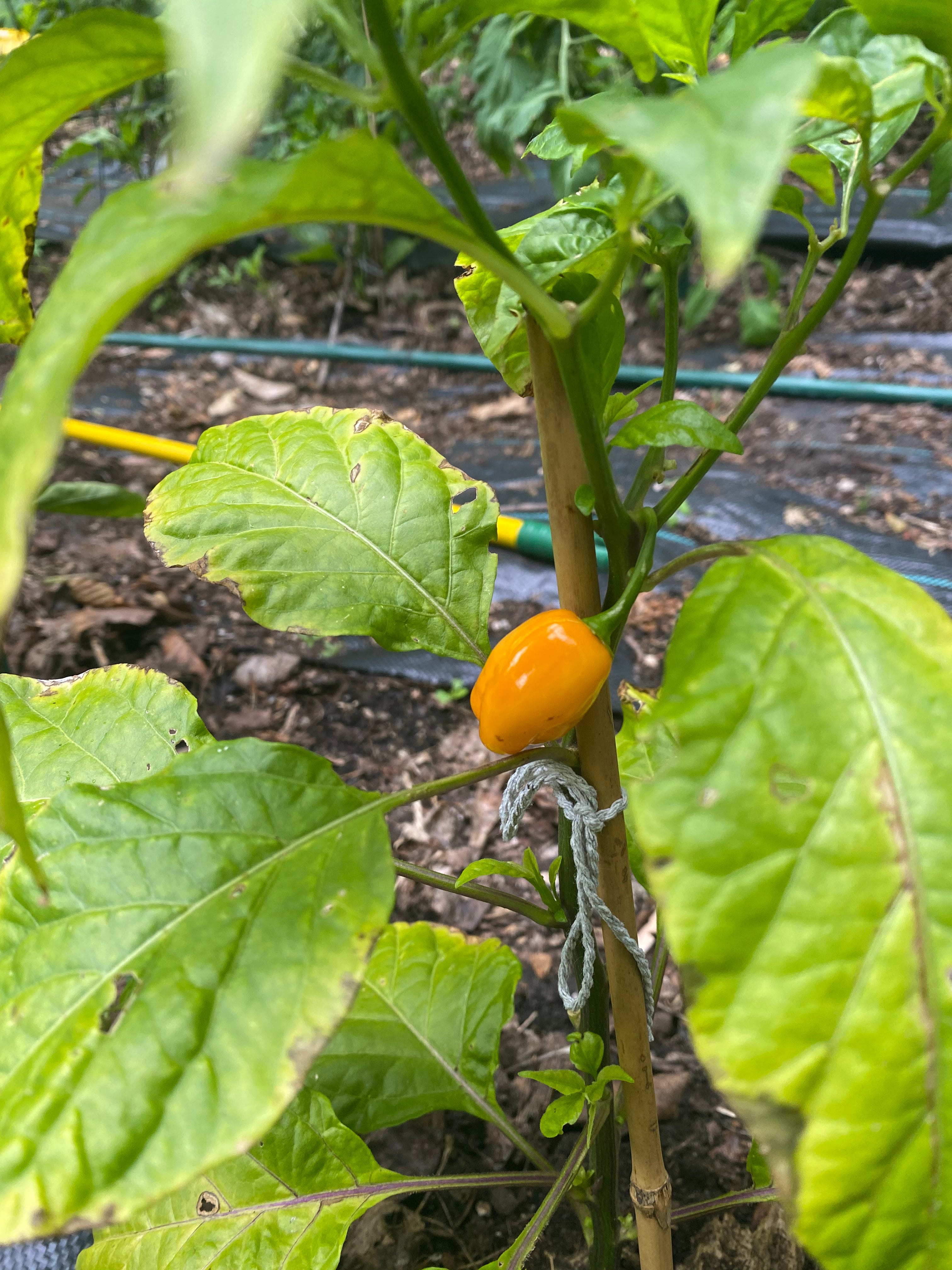
Trevor gifted us with pepper plants grown from seed with fascinating history. Here’s another French variety, Piment de Bresse, “a rare chili pepper grown in the Bresse region in France…The peppers are used traditionally in powder form and incorporated into a cheese called fromage fort. It is an ancient heirloom that has been used for hundreds of years.”
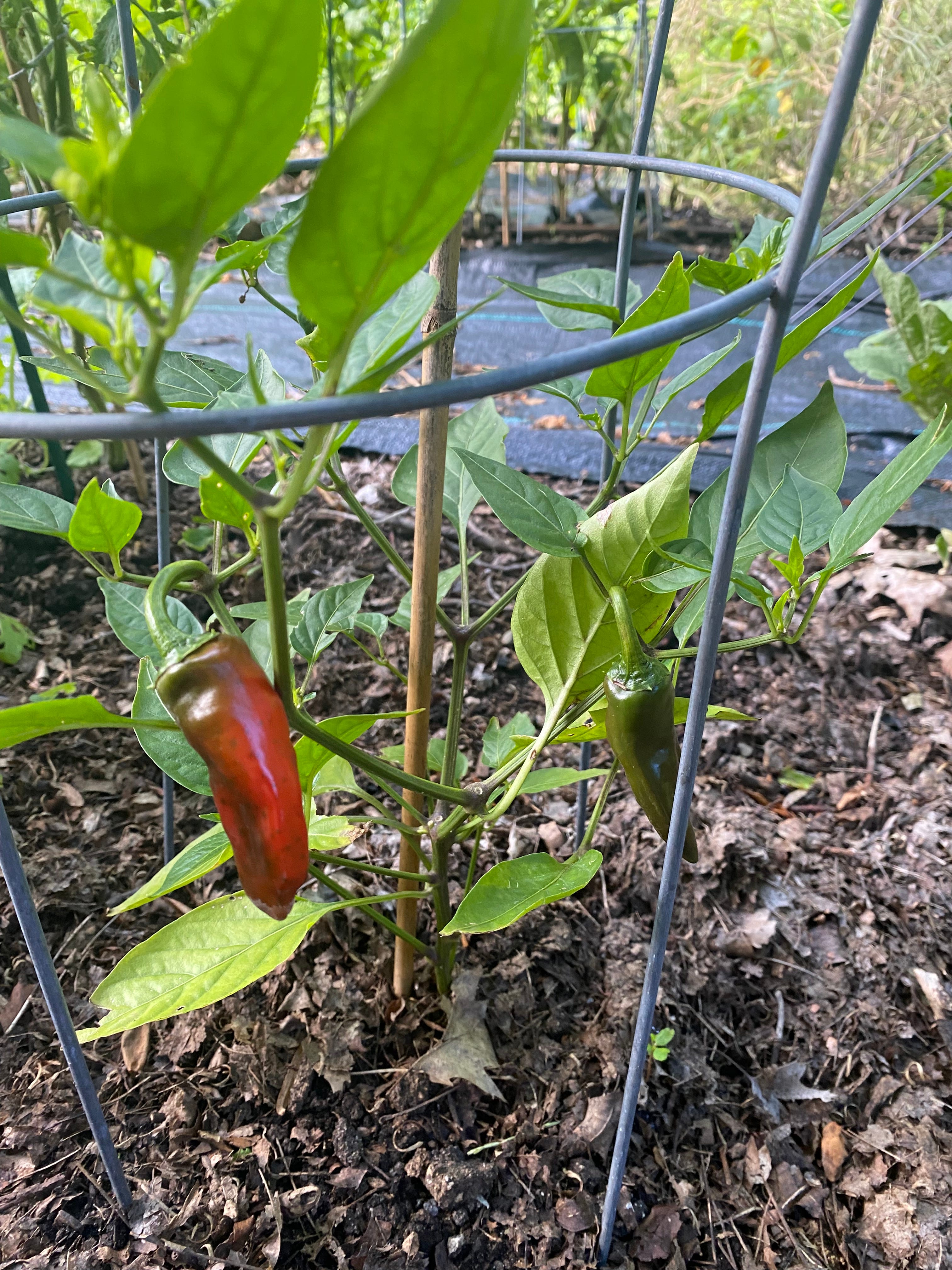
Trevor wrote today with a conundrum: I’ve got two padron pepper plants and one looks like a proper Padron but the second one is a complete toss up. Had them next to cayennes last year so maybe some cross pollination? But these look nothing like my other cayennes in the garden. These are twice the size and producing like crazy. Have yet to turn ripe yet though. We’ll see what color they end up being.
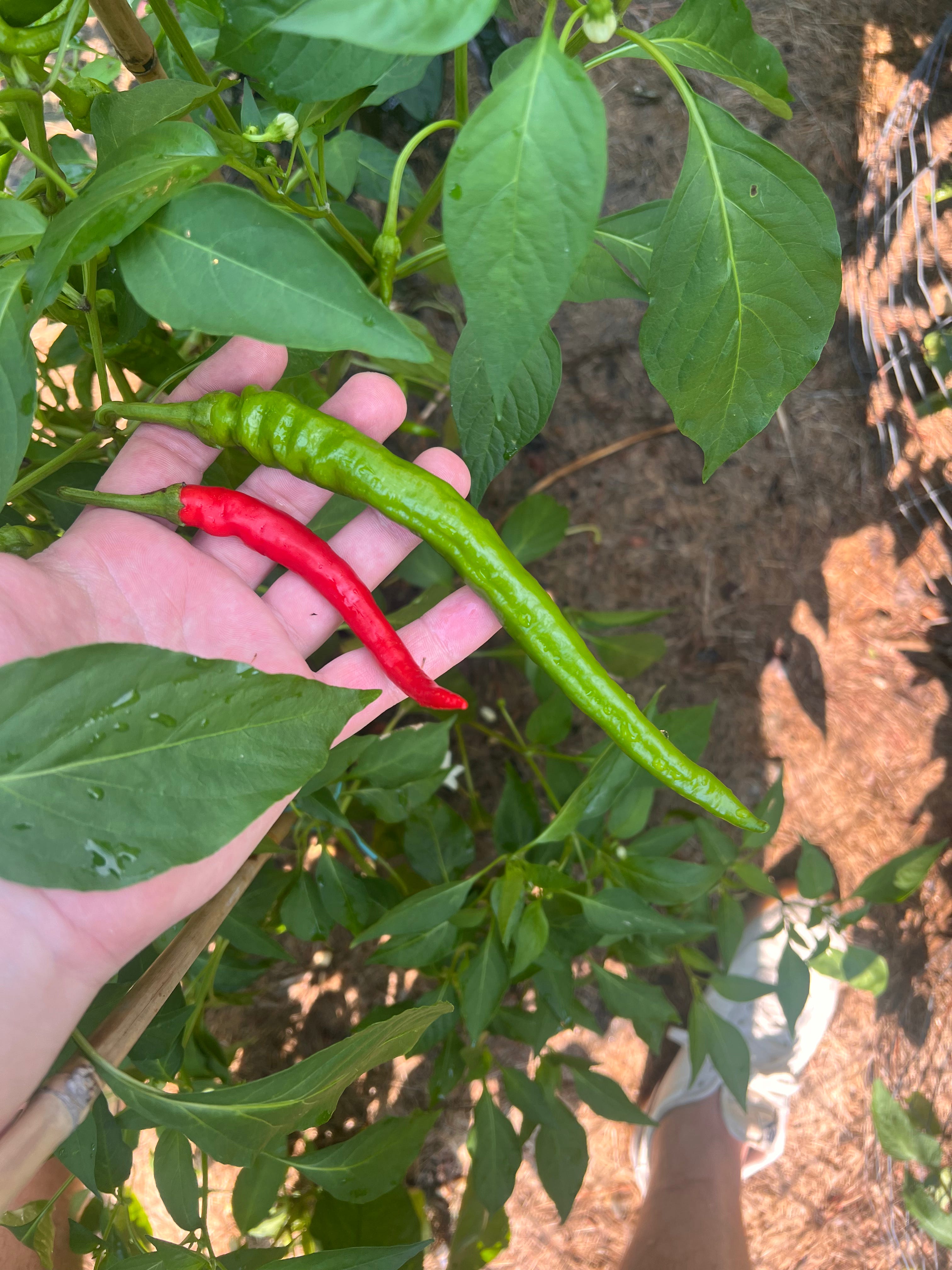
We’ll keep you updated.
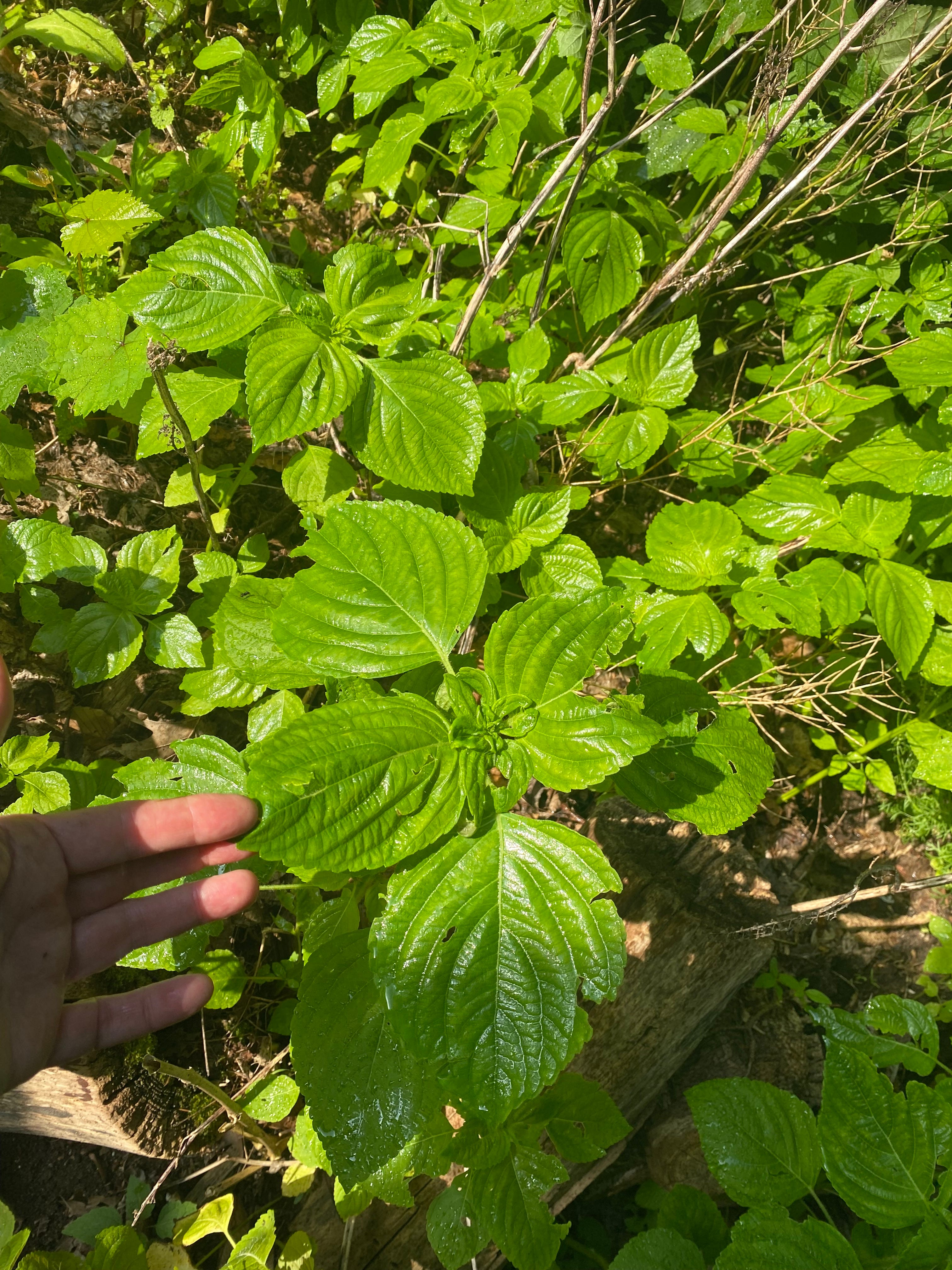
Not colorful but eminently edible, delighted to see the shiso re-seeding itself. Maybe we’ll try the Shiso-Infused Gin Cocktail when friends visit next week. Stay cool…